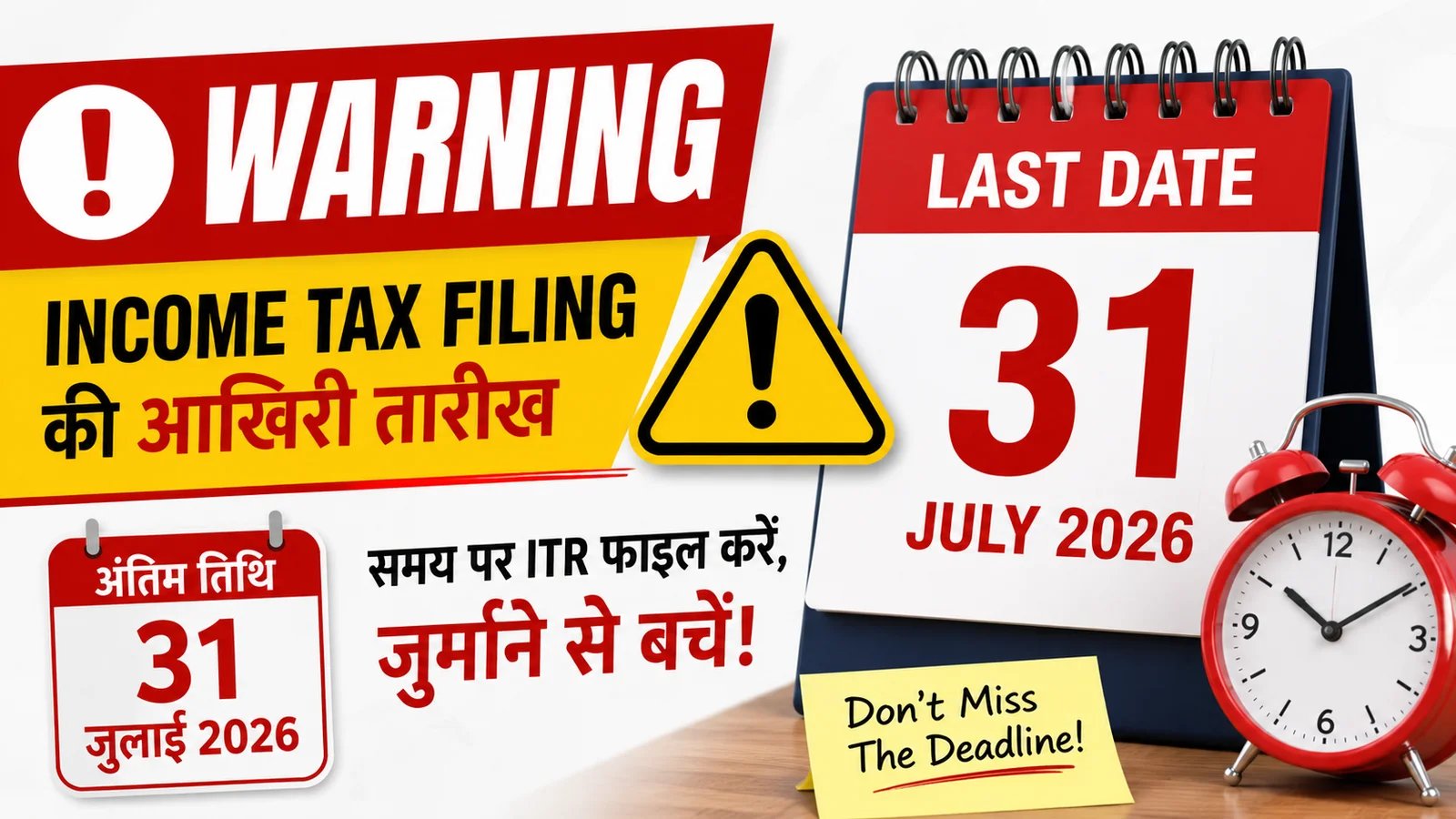
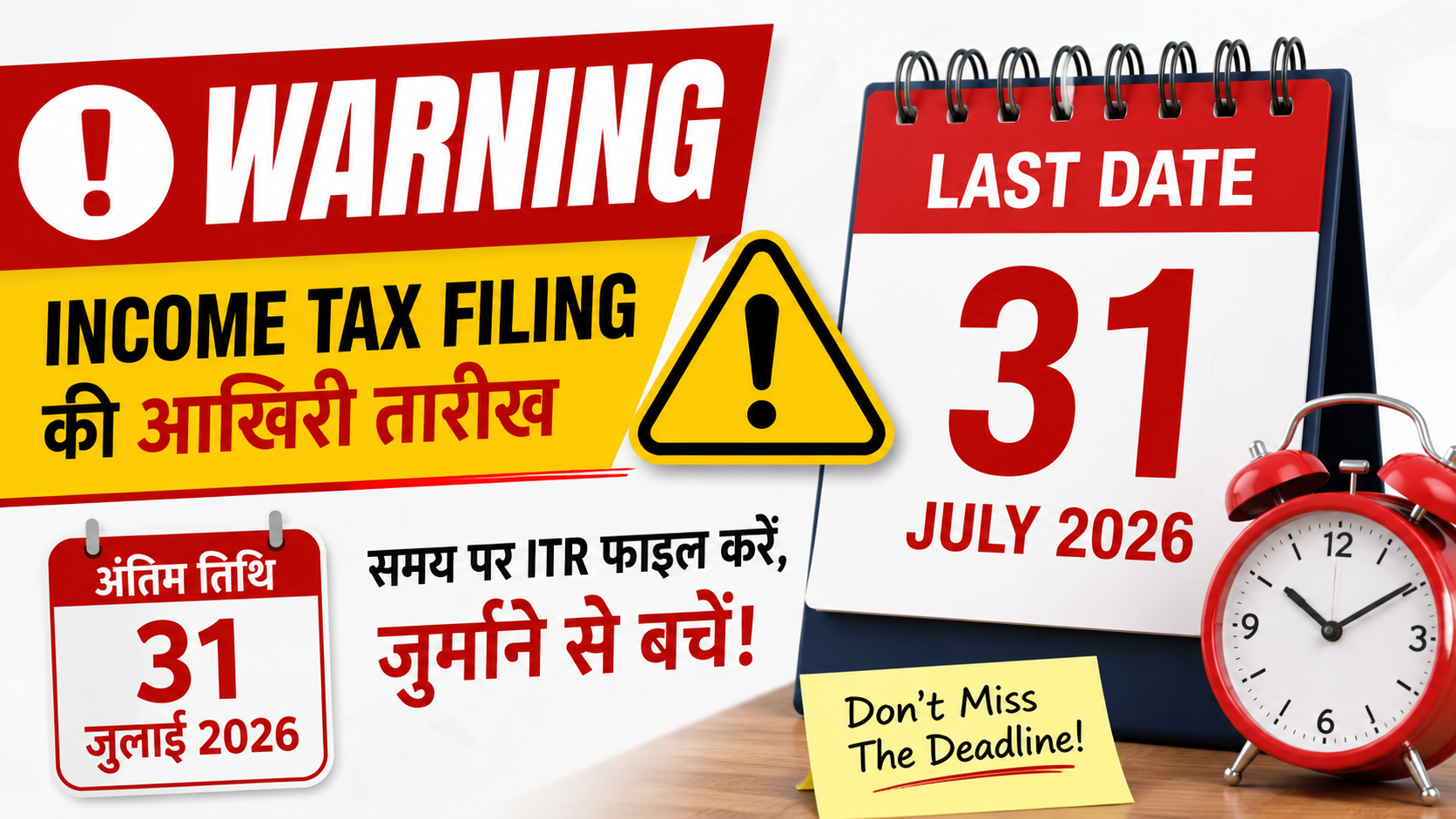
The process of filing Income Tax Return (ITR) for the financial year 2025-26 has started. If your annual income exceeds the prescribed limit, it is important to file ITR on time. The last date for filing returns for general taxpayers has been set as July 31, 2026, while some business category taxpayers have been given additional time.
According to experts, even a small mistake made while filing ITR can lead to tax notice, additional tax, interest or penalty later. Therefore, it is very important to check all the documents and financial information before filing the return.
Why is it important to file ITR on time?
Income tax return is the official record of your income, investments and financial transactions done during the entire financial year. ITR is also considered an important document in bank loan, visa application and many other financial transactions.
If the return is not filed within the stipulated time, then you may have to file a belated return later by paying a penalty.
Income Tax Department keeps an eye on every transaction
Presently the Income Tax Department analyzes the information of taxpayers using modern technologies such as Artificial Intelligence (AI), data analytics and various financial databases.
Records of bank accounts, TDS, stock market investments, mutual funds, property buying and selling, foreign investments and other financial activities are available with the department. In such a situation, hiding any income or giving wrong information can be costly.
Pay special attention to these 10 things while filing ITR
1. Don’t rely only on Form 16
Most of the salaried employees consider Form 16 as the final document. Whereas it only contains information about salary and TDS.

If you have received income from bank interest, rent, dividend, freelance income, profit from stock market or any other source, then it is important to include it in the return.
2. Select the correct ITR form
It is very important to choose the right form while filing returns.
- ITR-1: For salary, pension and simple interest income earners
- ITR-2: For those owning capital gains, foreign property or more than one house
- ITR-3: For business, trading and freelance income earners
- ITR-4: For small traders and professionals
Your return may be considered invalid if you fill in the wrong form.
3. Be sure to check AIS, TIS and Form 26AS
It is necessary to reconcile AIS, TIS and Form 26AS before filing the return.
If a difference is found between the income recorded in these documents and the income declared by you, the department may seek clarification.
4. Add the income of both the institutions when changing jobs.
If you have changed jobs during the financial year, do not forget to include the salary received from both old and new employers.

Failure to do so may result in less tax being collected.
5. Fill the bank account information correctly
It is necessary to enter the correct bank account number and IFSC code to receive the refund.
Tax refunds may be delayed due to incorrect information.
6. Don’t ignore interest income
It is also important to include interest received from FD, RD, savings account and bonds in income.
Even if TDS is not deducted on it, it is still necessary to declare it.
7. Provide information about share and mutual fund transactions
If you have sold shares, redeemed mutual funds or sold property, you must report the profit or loss arising from the same in your return.

This information is already available to the department.
8. Claim tax deductions correctly
Claim tax exemptions like 80C, 80D, NPS and home loan interest only on eligible investments.
Keep all investment related documents safe.
9. Disclose foreign income and investments
It may be necessary to furnish information about foreign shares, bank accounts, ETFs or other foreign assets in the return.
Problems may increase if this rule is not followed.
10. Don’t forget to do e-verification
After submitting ITR, it is necessary to e-verify it.

This can be accomplished through Aadhaar OTP, Net Banking, Digital Signature or other means.
If e-verification is not done then the return will not be considered valid.
What will happen after July 31?
If a taxpayer does not file ITR by 31 July 2026, he can file the belated return till 31 December 2026 with the prescribed conditions. However, additional fees and interest may have to be paid.
conclusion
Instead of rushing while filing income tax return, check all the documents and enter the correct information. The Income Tax Department has now become technologically advanced and information about most of the financial transactions is available with it. Therefore, filing ITR on time and correctly is the safest option.
FAQs
Q1. What is the last date for filing ITR?
The last date for filing ITR for general taxpayers is July 31, 2026.
Q2. Can ITR be filed even after July 31?
Yes, belated return can be filed till December 31, 2026.

Q3. Is it necessary to show FD interest in ITR?
Yes, it is necessary to include interest received from FD, RD and other deposit schemes in income.
Q4. Will the income of both the companies have to be shown when changing jobs?
Yes, it is necessary to include the total salary received in the financial year in the return.
Q5. Why is e-verification important?
Without e-verification, ITR is not considered valid.
Q6. What are AIS and Form 26AS?
These documents provide information about your income, TDS and financial transactions.
Q7. What will happen if you choose wrong ITR form?
In such a situation, your return may be considered defective and may have to be corrected again.